As global electricity demand rises, choosing the right Circuit Breaker Distribution Panel becomes a safety and reliability decision. The International Energy Agency’s Electricity 2024 report projects global electricity demand to grow by about 3.4% annually from 2024 through 2026. That growth affects homes, factories, data centers, and renewable-energy installations. More loads mean more heat, fault-current stress, and coordination challenges inside distribution equipment.
NFPA research adds a practical warning. Its report on home fires involving electrical distribution and lighting equipment estimated an annual average of approximately 32,000 fires in the United States during the studied period. Circuit breakers cannot correct poor installation, loose terminals, or incorrect conductor sizing. That point is easy to overlook.
Mike Holt, a widely recognized electrical-code educator, states, “Electricity is dangerous, and it must be respected.” His reminder fits the 2026 panel market. A high interrupting rating, reliable busbar design, and clear circuit identification matter more than a modern-looking enclosure. I have seen product comparisons overemphasize smart monitoring while ignoring available fault current and maintenance access.
This guide examines the best Circuit Breaker Distribution Panel types for different applications. It considers residential load centers, commercial panelboards, industrial switchboards, modular systems, and panels supporting solar or battery storage. The comparison uses standards-based thinking, manufacturer documentation, installation experience, and lifecycle concerns. Some recommendations may change after a site survey. That is not a weakness. It is an important limitation.
The strongest panel is not always the largest or most connected model. It is the one correctly matched to the load profile, environment, protection requirements, and future expansion plan.
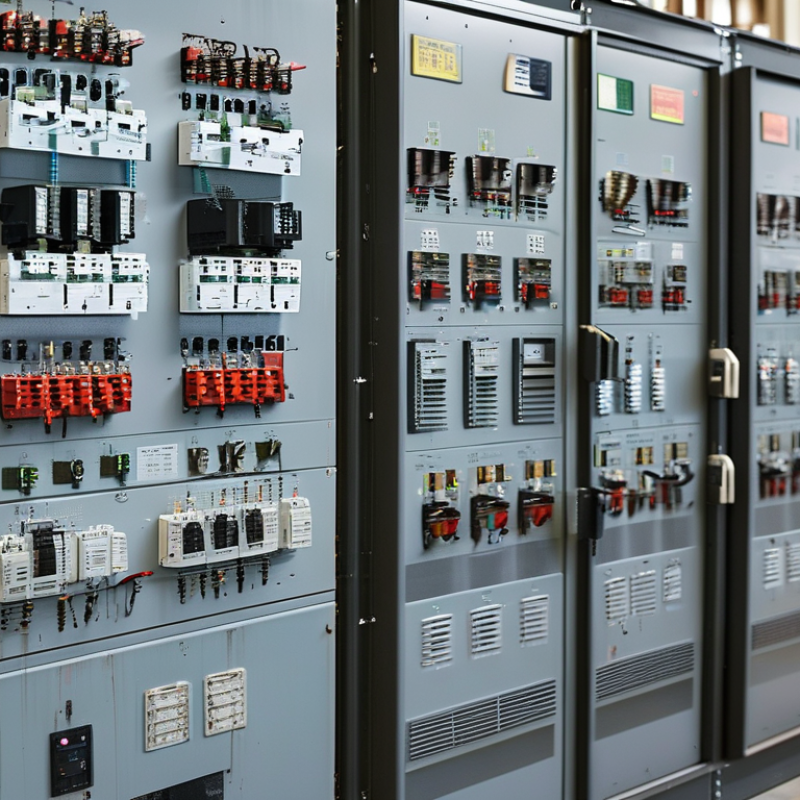
A distribution panel receives electricity from the service or a subpanel feeder. It divides that power among branch circuits throughout a building. Each breaker protects conductors from overloads and short circuits. The busbars carry current, while neutral and grounding bars provide separate return and safety paths. Common layouts include main-breaker panels and main-lug-only panels. The right choice depends on system capacity, location, and local electrical requirements.
A reliable panel needs accurate circuit labels, suitable interrupting ratings, and enough spaces for future circuits. Breaker compatibility matters. Never select one only because it fits physically. During practical inspections, loose terminals, warm breaker faces, and darkened insulation deserve immediate attention. A neat panel is not automatically safe. I have seen well-labeled panels with hidden capacity problems. Load calculations and torque checks are easy to overlook, yet they strongly affect performance. Always follow current codes and installation instructions.
2026 Best Circuit Breaker Distribution Panel Types?
Main Distribution Panel Types for Residential and Commercial Buildings
For residential buildings, a main breaker panel is the common starting point. It houses the service disconnect and branch circuit breakers. It distributes power to lighting, outlets, appliances, and heating equipment. Smaller homes may use a compact load center. Properties with utility meters near the exterior may use a meter-main combination panel. This arrangement saves wall space and can simplify service access.
Commercial buildings usually require more structured distribution. A main distribution board receives incoming power and feeds several downstream panels. These panels may serve offices, kitchens, workshops, or mechanical rooms. Larger facilities often use switchboards with higher capacity and stronger internal separation. A main-lug-only panel can work downstream, but it needs an upstream disconnect. The correct choice depends on calculated loads, available fault current, and local electrical requirements.
Field inspections often reveal practical issues that drawings miss. A panel may have enough breaker spaces but insufficient conductor room. Clear labels matter. Arc-fault and ground-fault protection may apply to specific circuits. Future capacity also deserves attention, especially where electric heating or vehicle charging is planned. Experienced electricians check working clearance, grounding, bonding, and enclosure ratings before installation. A neat panel can still be poorly planned. Designers sometimes underestimate how quickly a growing building outgrows its original distribution layout.
2026 Best Circuit Breaker Distribution Panel Types?
Comparing Breaker Configurations, Capacity, and Safety Features
Choosing a distribution panel starts with the building’s actual load, not its appearance. Main-breaker panels suit locations needing one clear disconnect. Main-lug-only panels work well as downstream panels when an upstream disconnect already exists. A subpanel can add circuits, but its neutral and grounding paths must remain properly separated.
Breaker configuration affects both space and serviceability. Single-pole breakers commonly supply lighting and general outlets, while double-pole breakers serve equipment requiring higher voltage. Tandem breakers save space, yet they should only fit panels designed for them. A compact layout is not automatically a safe layout. Leave room for future circuits.
Capacity requires careful calculation. Check the panel’s bus rating, system voltage, available fault current, and the breaker’s interrupting rating. A higher ampere rating does not fix an undersized feeder. In practical inspections, overloaded neutrals and crowded conductors remain easy details to miss. I have also seen beautifully labeled panels with poor torque control, which is a useful reminder that appearance proves little.
Safety features deserve close attention. Ground-fault protection helps reduce shock risk in wet or outdoor areas. Arc-fault protection can identify dangerous arcing in many occupied spaces. Surge protection may protect sensitive electronics, but it cannot replace correct wiring. Use clear circuit labels, adequate enclosure space, and manufacturer-approved breaker combinations. A qualified electrical professional should verify the load calculation, conductor sizing, and local installation requirements before energizing the panel.
| Panel / Breaker Configuration | Typical Application | Common System Voltage | Typical Breaker Ratings | Typical Panel Capacity | Key Safety Features | Main Advantages | Important Limitations |
|---|---|---|---|---|---|---|---|
| Single-Pole Breaker Panel | Lighting, receptacles, and other single-phase branch circuits | 120 V in common North American systems | 15–30 A commonly used; higher ratings require conductor and equipment compatibility | Typically 60–200 A service or feeder rating, depending on the installation | Overcurrent protection, neutral and grounding separation where required, optional AFCI/GFCI protection | Simple layout, economical, and suitable for many lighting and receptacle circuits | Cannot supply most 240 V loads by itself; available spaces and bus rating must be checked |
| Two-Pole Breaker Panel | Electric ranges, water heaters, heat pumps, HVAC equipment, and other larger loads | 208–240 V in many split-phase or three-phase applications | 20–60 A is common; larger ratings are used for engineered equipment | Common panel ratings include 100, 125, 150, 200, and 225 A | Common-trip or handle-tied disconnecting, thermal-magnetic protection, optional GFCI or equipment-specific protection | Provides simultaneous disconnection of two ungrounded conductors for many 240 V loads | Requires correct phase arrangement, conductor sizing, and load calculation |
| Three-Pole Breaker Panel | Commercial motors, pumps, HVAC systems, and three-phase distribution | 208 V or 240 V common; 480 V systems are also widely used in commercial facilities | 15–100 A common for branch circuits; larger molded-case breakers may be used | Often 100–800 A in commercial distribution, subject to system design | Common-trip operation, short-circuit protection, phase identification, grounding and bonding provisions | Efficient power delivery for balanced three-phase loads and motor equipment | Requires phase-sequence verification and qualified installation; not normally used for ordinary single-phase circuits |
| Four-Pole Breaker Panel | Three-phase systems requiring switched neutral conductors or specialized transfer equipment | Commonly 208/120 V or other four-wire systems, depending on the design | Rating is selected according to the feeder, transfer switch, and connected load | Commonly 100–800 A in specialized commercial and industrial installations | All-pole disconnecting where required, interlocking, neutral switching, and short-circuit protection | Useful for generators, transfer systems, and installations where neutral isolation is required | More complex and costly; neutral switching must follow the system grounding design |
| Main Breaker Distribution Panel | Service entrance or primary distribution point for a building | Typically 120/240 V single-phase or 208Y/120 V three-phase | Main breaker commonly 100–400 A; larger equipment is available for engineered systems | Usually 100–400 A, with bus ratings selected for the calculated demand | Main disconnect, short-circuit rating, grounding and bonding provisions, dead-front cover, optional surge protection | Provides a single, accessible point for disconnecting major building circuits | Must comply with service equipment rules, utility requirements, working-clearance rules, and available fault current |
| Main-Lug-Only Panel | Subpanels and feeder-fed distribution where upstream overcurrent protection is provided | 120/240 V single-phase or 208Y/120 V three-phase are common | Branch breakers commonly 15–100 A; feeder rating is determined upstream | Commonly 60–225 A, depending on the feeder and panelboard rating | Feeder overcurrent protection, separate equipment grounding path, insulated neutral in most subpanel applications | Lower cost and convenient for garages, additions, workshops, and remote areas | Does not provide a local main disconnect unless one is separately installed or required by the design |
| Indoor Enclosed Panelboard | Dry indoor locations such as utility rooms, corridors, and electrical rooms | Voltage and phase depend on the connected system | Typically 15–600 A for branch and feeder applications | Common bus ratings range from 100–1200 A in standard building distribution | Dead-front construction, insulated barriers, circuit identification, suitable interrupting rating | Compact, accessible, and generally easier to maintain than outdoor equipment | Not suitable for wet, damp, corrosive, or exposed locations unless specifically rated for them |
| Outdoor Weather-Resistant Panel | Exterior walls, service entrances, workshops, agricultural areas, and outdoor equipment | Voltage and phase depend on the electrical service | Commonly 15–600 A; the enclosure and breaker combination must be listed for outdoor use | Frequently 100–400 A for building and residential distribution | Weather-resistant enclosure, corrosion-resistant hardware, sealing provisions, dead front, and lockable access where applicable | Protects energized components from rain, dust, and outdoor exposure when correctly installed | Requires correct enclosure rating, drainage, cable entries, and protection from direct physical damage |
| AFCI / GFCI Protective Panel | Residential and other locations where arc-fault or ground-fault protection is required | Most commonly 120 V branch circuits; device availability varies by circuit type | AFCI branch breakers are commonly 15–20 A; GFCI protection is available for selected branch and feeder ratings | Panel size follows the service or feeder rating; protective devices are selected per circuit | AFCI detects hazardous arcing; GFCI trips on ground-fault current imbalance; test functions are normally provided | Improves protection against electrical fires and shock hazards when correctly applied | Requirements depend on the adopted electrical code, location, wiring method, and equipment type |
| Surge-Protected Distribution Panel | Homes, offices, data-sensitive spaces, and facilities with sensitive electronic equipment | Compatible with the system voltage and grounding arrangement specified for the surge protective device | Breaker or disconnect rating is selected according to the protective device instructions and installation design | Typically 100–400 A for building panels | Transient voltage surge suppression, thermal protection, status indication, and correct grounding connections | Helps reduce damage from transient voltage events and switching surges | Does not replace overcurrent protection, lightning protection, or proper grounding; protection devices have finite service life |
2026 Best Circuit Breaker Distribution Panel Types?
Selecting the right distribution panel starts with the electrical system, not the cabinet’s appearance. A main breaker panel suits many small buildings because it provides one clear disconnect point. A main lug panel can work well downstream as a subpanel, especially where another panel already provides overcurrent protection. For workshops and larger facilities, modular panels offer more circuit spaces and easier future expansion. However, extra capacity is not automatically better.
Match the panel to the system voltage, phase arrangement, calculated load, and available fault current. Confirm conductor size, breaker ratings, busbar capacity, and neutral bonding requirements before installation. Wet, dusty, or outdoor locations need suitable enclosure protection and corrosion resistance. I have seen crowded panels create heat, confusing labels, and difficult maintenance. Leave practical spare spaces. They are cheaper than rebuilding a full panel later.
Safety devices should reflect the circuit’s use. Ground-fault protection may suit wet areas, while arc-fault protection can reduce fire risk in selected building applications. Surge protection is useful where sensitive electronics face frequent disturbances. Inspectors and licensed electricians should verify local code requirements, clearances, grounding, and torque values. A thermal scan after commissioning can reveal loose connections that visual checks miss. Still, inspection is not magic. Load patterns change, and a panel that passed today may need review after new equipment is added.
The chart compares typical main-bus current ranges used for common distribution panel categories. Residential load centers generally serve smaller 100–225 A systems, while commercial panelboards and industrial switchboards support substantially larger loads. Final selection should consider voltage, available fault current, enclosure rating, space requirements, expansion capacity, and local electrical code requirements.
Installation, Inspection, Maintenance, and Future Expansion Considerations
For a 2026 installation, the panel type should match the load, space, environment, and expansion plans. A qualified electrician should verify service capacity, conductor sizing, bonding, grounding, and fault ratings before installation. Leave clear working space around the enclosure. Drywall dust and cramped access can turn a simple replacement into a safety problem. I have seen neat-looking panels fail practical checks because labels were vague or circuits were doubled without approval. That detail matters.
Inspection should include torque verification, heat marks, corrosion, damaged insulation, and accurate circuit directories. Thermal scanning can reveal a warm termination, but it does not replace hands-on testing. During maintenance, keep the interior clean and dry, test protective devices according to instructions, and recheck connections after major load changes. Do not treat a recent installation as permanently reliable. People forget.
For future expansion, reserve breaker spaces, conduit capacity, and wall room for additional equipment. A larger enclosure may cost more today but prevent disruptive rebuilding later. Still, empty spaces alone do not guarantee capacity; service ratings and feeder conductors set the real limit. Project records should include schedules, test results, photographs, and revisions. My own planning mistake was allowing physical space without confirming upstream capacity. It looked flexible, but it was not.