China Top Cable Connector Manufacturers How to Choose?
Choosing China’s top Cable Connectors manufacturer requires more than comparing factory prices. It demands evidence, testing, and careful attention to application conditions. A connector may look impressive in a catalog, yet fail after repeated vibration, moisture exposure, or thermal cycling.
John Ruskin, a respected authority on quality, stated, “Quality is never an accident; it is always the result of intelligent direction and skillful execution.” This principle fits Cable Connectors purchasing closely. Reliable manufacturers should provide material specifications, contact-plating details, insulation ratings, and traceable inspection records. Ask for samples. Examine the crimp barrel, locking mechanism, seal, and housing finish. Small details matter.
Look beyond polished websites. Visit the production line when possible. Review mold-control procedures, automated assembly, electrical testing, and incoming-material checks. Certifications such as ISO 9001 can support confidence, but they do not replace independent product testing. That distinction is often missed.
Application experience also matters. A manufacturer serving automotive, solar, industrial, or telecommunications projects may understand different connector stresses. Request test data for current capacity, mating cycles, salt spray, vibration, and temperature resistance. Confirm whether the published results apply to the exact model you will purchase.
Price still matters. It should not lead alone.
A low quotation may hide weaker copper, thinner plating, inconsistent dimensions, or limited technical support. Even experienced buyers can overlook one variable. Therefore, this guide compares China’s leading manufacturers through product quality, engineering capability, certification, customization, delivery reliability, and after-sales service. The best choice is rarely the loudest supplier. It is the one that can repeatedly prove performance under real working conditions.
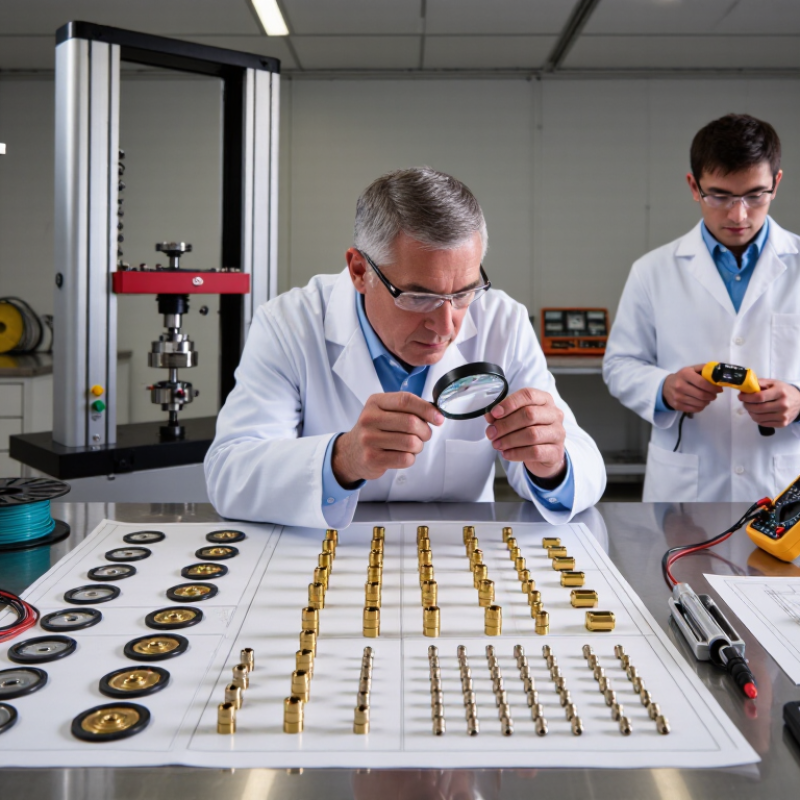
What Defines a Top Cable Connector Manufacturer in China
China Top Cable Connector Manufacturers: How to Choose?
What defines a top cable connector manufacturer in China? It is not only production capacity or a polished website. Reliable manufacturers understand cable diameter, contact resistance, insulation materials, vibration, moisture, and operating temperature. They ask for the application before suggesting a connector. That practical habit matters.
During factory evaluations, I look for clear drawings, controlled tooling, and traceable material records. A serious manufacturer should explain terminal plating, crimp height, sealing performance, and tolerance limits in plain language. Sample testing should include pull-force checks, continuity tests, thermal cycling, and salt-spray evaluation when needed. Inspection reports must identify dates, batches, equipment, and responsible personnel. Vague documents create expensive problems later.
Small details reveal competence. Can the factory quickly provide a dimensional report? Does it keep rejected parts separate? Are molds maintained on a documented schedule? These answers often matter more than a large workshop. No supplier is flawless. Even experienced teams may miss a packaging weakness or underestimate field vibration. A dependable partner admits such gaps and proposes a corrective test. Communication also deserves measurement: compare response quality, engineering questions, sample revisions, and delivery consistency. The best choice is not always the lowest quotation. It is the manufacturer that can repeatedly turn a clear specification into safe, consistent connectors.
Key Cable Connector Types and Their Main Applications
Cable connectors are selected by application, not appearance. In factory control cabinets, rectangular connectors handle dense signal wiring and repeated service. Circular connectors suit sensors, motors, and outdoor equipment because they resist vibration and accidental rotation.
Coaxial connectors protect high-frequency signals in antennas, cameras, and testing instruments. Terminal blocks simplify fixed wiring inside distribution panels.
Waterproof connectors, often rated by IP levels, support lighting systems, vehicles, and agricultural machines exposed to rain or dust.
For battery systems, locking power connectors need suitable current ratings, secure contacts, and heat-resistant insulation. A small mismatch can cause voltage loss or overheating.
Tips: Check voltage, current, wire size, contact material, and operating temperature. Request test reports, dimensional drawings, and sample verification from the manufacturer. I usually inspect crimp strength and insertion force before approving a cable assembly. The housing may look strong, yet the terminal can loosen after repeated mating. That detail is easy to miss.
Reliable manufacturers should explain material choices, sealing methods, production controls, and traceability. Ask whether connectors are tested for vibration, salt spray, insulation resistance, and temperature cycling. Certification documents should match the exact connector series, not a similar product. Some selection decisions remain uncertain until real installation tests begin. A connector that works indoors may fail quickly beside oil mist, sunlight, or constant movement. Practical feedback from installers often reveals weaknesses that a catalogue cannot show.
How to Evaluate Quality, Materials, and Production Standards
Choosing a top cable connector manufacturer in China requires more than comparing prices. Quality begins with material control. Ask whether contacts use copper alloys with stable conductivity and adequate spring strength. Check plating thickness, surface uniformity, and resistance to corrosion. Housing materials should match the working environment, such as heat, moisture, oil, or vibration.
Material certificates matter. So does traceability.
During factory evaluation, request production records and inspection plans. A reliable facility should control molding temperature, crimping force, terminal dimensions, and sealing performance. Inspectors should use calibrated gauges, microscopes, pull-force testers, and continuity equipment. Production should follow documented procedures, with records linked to batches. Certifications such as ISO 9001 can show process discipline, but certificates alone cannot prove connector performance.
Sample testing should reflect real installation conditions. Test mating cycles, insulation resistance, dielectric strength, current rise, vibration, and temperature exposure. Ask for independent or witnessed reports when the application is critical. I have seen attractive samples fail because the crimp barrel was slightly oversized. That small defect created unstable contact pressure. A factory may also pass a laboratory test while missing consistent control during mass production. This is where audits, first-article approval, and regular batch sampling become valuable. Do not ignore packaging: damaged terminals, mixed lots, or unclear labels often reveal weak handling practices.
How to Select the Right Chinese Cable Connector Supplier
How to Select the Right Chinese Cable Connector Supplier
Choosing a Chinese cable connector supplier requires more than comparing online prices. Start with your application details: current, voltage, cable diameter, contact material, sealing grade, and operating temperature. Send a clear drawing, not only a product photo. Precise data reduces substitutions during sampling. Ask how the supplier controls crimp height, plating thickness, and pull-out strength. Request recent inspection records linked to your exact part. Generic certificates are not enough. Confirm whether testing occurs in-house or through an independent laboratory.
A factory audit can reveal practical details, including warehouse humidity, material labels, mold maintenance, and rejected-part control. Review the supplier’s quality system and traceability process. Can they identify the operator, batch, and inspection result? That answer matters during field failures. Speak with an engineer, not only a sales representative. Technical replies should include tolerances, test methods, and clear limitations. Vague promises deserve caution.
Evaluate samples under real conditions. Bend the cable repeatedly, expose connectors to moisture, and check terminal retention after assembly. Record results with photos and measurements. I once focused too heavily on a low sample price and ignored slow engineering responses. That mistake created delays later. Ask about tooling ownership, minimum order quantities, lead times, packaging, and replacement procedures. Put every agreement into a controlled document. A supplier may appear capable online, yet production consistency can still vary between batches. Build a small pilot order before approving regular supply.