SunVena Solar Blog
Residential Solar News, Insights & Resources
Top Off Grid Solar Inverters for Global Buyers
Choosing an off grid solar inverter is not simply a matter of comparing wattage and price. It is a decision about reliability, safety, battery life, and daily comfort. In a remote cabin, a weak inverter can stop refrigeration, water pumping, or medical equipment without warning. The problem becomes serious quickly.
Günther Cramer, the late founder of SMA Solar Technology, described the inverter as “the heart of every solar system.” His observation remains useful for global buyers. An inverter controls how solar panels, batteries, generators, and household loads work together. The best model should match local voltage, frequency, climate, battery chemistry, and expected peak demand.
Real conditions matter.
A 3,000-watt inverter may run a laptop and lights easily. It may struggle when a refrigerator starts beside a water pump. Hot rooms, dust, long cable runs, and poor ventilation can also reduce performance. Buyers should check continuous power, surge capacity, idle consumption, waveform quality, protection ratings, monitoring functions, and warranty support.
This guide compares leading off grid solar inverter options for different regions and use cases. It considers technical specifications, field practicality, installation demands, and after-sales reliability. Some rankings remain imperfect because product performance changes with batteries, weather, and maintenance. A highly rated inverter is not automatically the right choice.
That deserves reflection.
The safest decision comes from calculating actual loads, confirming local electrical requirements, and choosing support that remains available after installation. Fancy features help, but dependable power matters more.
Off-Grid Inverter Basics: DC–AC Conversion, MPPT, and 90–98% Efficiency
Top Off Grid Solar Inverters for Global Buyers
Off-Grid Inverter Basics: DC–AC Conversion, MPPT, and 90–98% Efficiency
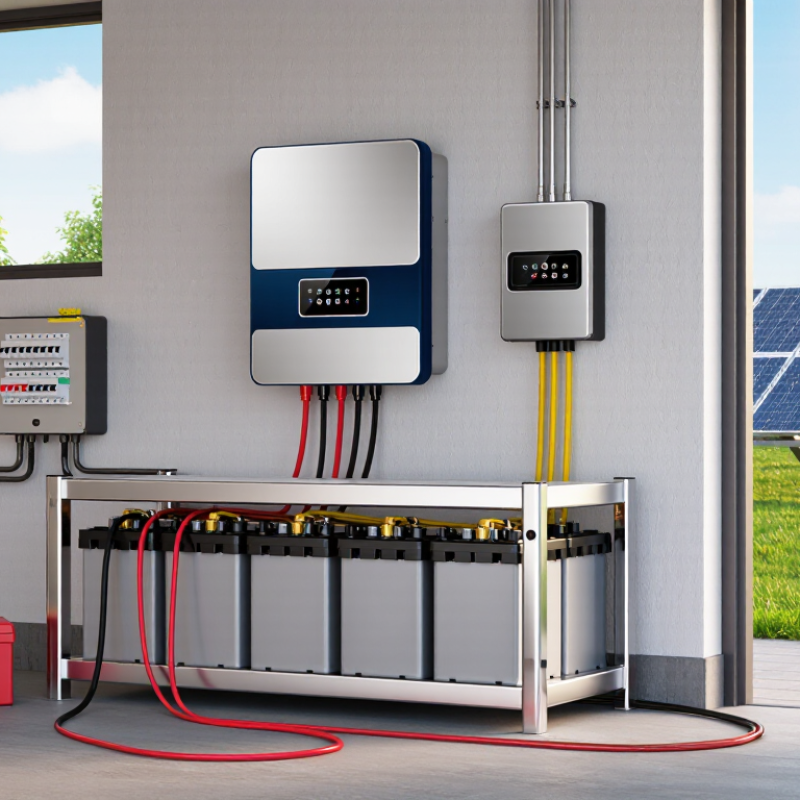
An off-grid inverter turns battery power into the alternating current used by household appliances. Solar panels produce direct current, which may charge a battery before the inverter supplies power to lights, a refrigerator, or a water pump. Check the inverter’s continuous and surge ratings against real appliance loads. A motor can briefly demand much more power when starting.
MPPT, or maximum power point tracking, adjusts the electrical load on solar panels to capture available energy as sunlight and panel temperature change. This matters on a cool, bright morning, when panel output can differ from its output at midday. MPPT cannot create extra energy. Shade, dirty panels, undersized wiring, and poor orientation still reduce harvest. Small details count.
Published conversion efficiency commonly falls around 90–98%, but the figure depends on operating conditions and measurement methods. Efficiency is usually highest near the inverter’s preferred load range; very light or heavy loads can increase losses. Heat also matters. Leave clear space around the unit, follow its ventilation requirements, and compare efficiency data at relevant loads rather than relying on one headline number. I would treat any single percentage as a useful reference, not a promise of everyday performance. A carefully sized system still needs room for cloudy days and unexpected demand.
Top Off Grid Solar Inverters for Global Buyers - Off-Grid Inverter Basics: DC–AC Conversion, MPPT, and 90–98% Efficiency
| Inverter Class | Typical Continuous Output | Battery Voltage | Common AC Output | Typical Peak Efficiency | MPPT Voltage Range | Typical PV Input Limit | Recommended Applications |
|---|---|---|---|---|---|---|---|
| Compact DC–AC Inverter | 300–1,000 W | 12 V or 24 V DC | 120 V or 230 V AC, single phase | 90–94% | Usually external or integrated PWM/MPPT controller; approximately 18–100 V DC when MPPT is included | 0.5–1.5 kW | Lighting, communications equipment, small appliances and emergency loads |
| Small Residential Off-Grid Inverter | 1–3 kW | 24 V or 48 V DC | 120 V or 230 V AC, single phase | 92–96% | 60–145 V DC | 1.5–4 kW | Cabins, small homes, backup circuits and remote workspaces |
| Mid-Size Hybrid Off-Grid Inverter | 3–6 kW | 48 V DC | 120 V, 230 V or split-phase AC | 94–97% | 90–450 V DC | 4–8 kW | Full-time residential systems, refrigeration, pumps and office loads |
| High-Capacity Residential Inverter | 6–12 kW | 48 V DC | 120/240 V split-phase or 230 V single phase | 95–98% | 120–500 V DC | 8–16 kW | Large homes, well pumps, workshop tools and higher startup loads |
| Modular Parallel Inverter System | 10–30+ kW | 48 V or higher DC battery banks | Single-phase or three-phase AC | 94–98% | 150–600 V DC, depending on system design | 15–40+ kW | Microgrids, farms, lodges, clinics and light commercial facilities |
Related Posts
-
What is a 3 Phase Solar Inverter and How Does it Optimize Energy Efficiency
-
How to Choose the Right Hybrid Solar Inverter for Your Energy Needs
-
Top 10 Benefits of Solar Panels with Micro Inverters?
-
Top 10 Best 3 Phase Solar Inverters in 2026?
-
How to Choose the Best Solar Power Inverter for Your Needs?
-
Unlocking the Power of Solar Panels with Micro Inverters for Homeowners