SunVena Solar Blog

Residential Solar News, Insights & Resources

What Is an NTC Heater and How Does It Work?

What Is an NTC Heater and How Does It Work? This question matters in electric vehicles, battery systems, medical devices, and household appliances. An NTC Heater uses a negative temperature coefficient thermistor. Its electrical resistance falls as temperature rises. That change controls current and creates a self-regulating heating effect.

At room temperature, the ceramic element presents higher resistance. Current then generates heat through electrical resistance. As the element becomes hotter, its resistance decreases. The heater can deliver rapid warmth, but its control circuit must limit current safely. A sensor, fuse, relay, or electronic controller is often added. Small ceramic beads may sit inside a metal probe. Larger assemblies may use aluminum housings for faster heat transfer.

Grand View Research and MarketsandMarkets identify thermistors as important components in temperature sensing, automotive electrification, and industrial electronics. Their industry analyses also connect growth with battery safety and energy-efficiency requirements. Exact market forecasts differ. That difference deserves attention. Product definitions are not always consistent.

Dr. Thomas Zednicek, a passive-components specialist, has stated, “Component behavior must be understood within its application, not in isolation.” His point applies directly to an NTC Heater. Resistance, voltage, airflow, mounting pressure, and ambient temperature work together. A heater that performs well in a laboratory may respond differently inside a sealed battery pack. It is not magic. It is controlled material behavior, with practical limitations.

This article explains the internal structure, resistance-temperature relationship, operating stages, advantages, and selection criteria. It also examines common design mistakes, because efficient heating still requires careful thermal and electrical engineering.
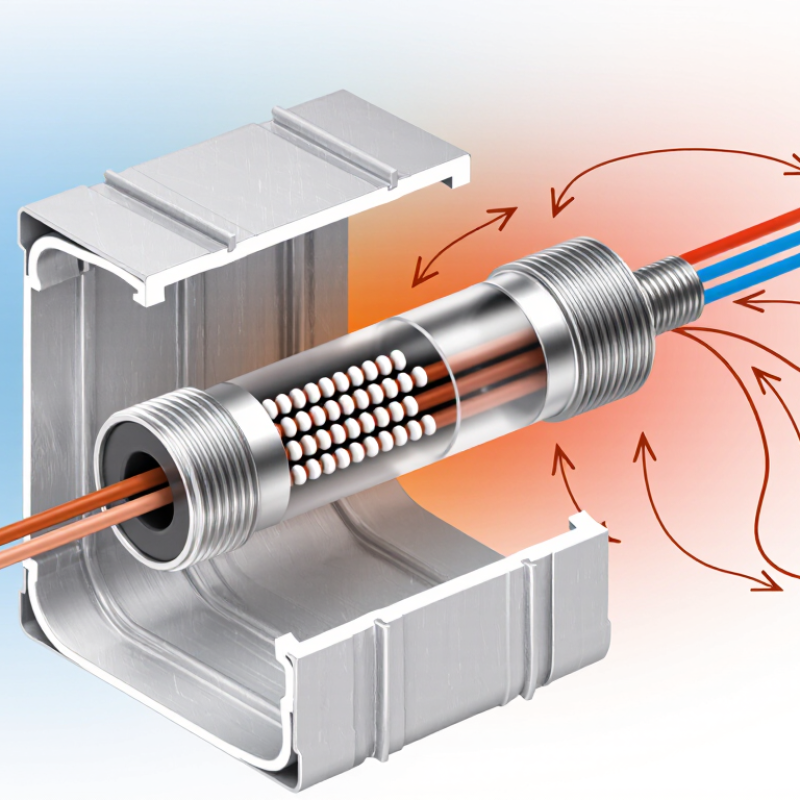
What Is an NTC Heater and How Does It Work?

NTC Heater Definition and Core Operating Principle

An NTC heater is a heating element built from a negative temperature coefficient thermistor. NTC means its electrical resistance decreases as temperature rises. At room temperature, the element resists current more strongly. After voltage is applied, current produces heat inside its ceramic body. As the body warms, resistance falls, allowing more current to pass.

This behavior differs from a PTC heater. Under a steady voltage, an NTC element may draw increasing current while heating. It is not automatically safe at every temperature. The phrase “self-regulating” can therefore be misleading. A thermostat, temperature sensor, current limiter, or electronic controller usually manages the operating range. In practical testing, the surface near the power terminals can become hot before the airflow feels warm, so thermal contact and insulation deserve close attention.

NTC heaters appear in compact air warmers, fluid warming systems, and controlled enclosures. A typical unit contains ceramic thermistor material, electrical leads, insulation, and a heat-transfer structure. Engineers select its resistance curve, rated voltage, airflow, and allowable temperature. A blocked air path can change its behavior quickly. Dust matters too. I have found that theoretical temperature ratings may not match real assemblies, especially when mounting pressure or ventilation changes. Reliable designs include over-temperature protection and testing under normal and fault conditions.

What Is an NTC Heater and How Does It Work?

An NTC heater uses a negative temperature coefficient thermistor. Its electrical resistance decreases as temperature increases, allowing the control system to regulate heating through changes in current and resistance. The values below represent a typical 10 kΩ NTC thermistor with a Beta value of approximately 3950 K, calculated at a reference temperature of 25°C.

Key Components and How They Work Together

An NTC heater is built around a negative-temperature-coefficient ceramic thermistor. As its temperature rises, electrical resistance falls. This response makes the element sensitive to heat, but not magically self-regulating. Under constant voltage, lower resistance can increase current. Designers must control that relationship carefully.

The ceramic NTC element creates heat when current passes through it. Metal electrodes spread current across its surface. Insulating layers prevent electrical contact with the housing. A temperature sensor monitors the element or nearby airflow.

A controller then adjusts voltage, while a thermal fuse interrupts power during abnormal overheating. The housing guides airflow across the hot surface, removing heat and reducing local stress. Small gaps matter. Poor contact can create hot spots.

The U.S. Department of Energy states that electric resistance heating converts nearly 100% of input electricity into heat at the point of use. The U.S. Energy Information Administration’s Residential Energy Consumption Survey reports that space heating represented about 42% of household energy use in 2020. These figures describe resistance heating broadly, not every NTC assembly. Efficiency can still fall through poor insulation, restricted airflow, or oversized power supplies. That limitation deserves attention. A practical design should measure resistance, surface temperature, airflow, and shutdown performance during testing, rather than trusting the component’s label alone.

Step-by-Step Heating Process in an NTC Heater

What Is an NTC Heater and How Does It Work?

An NTC heater uses a negative temperature coefficient material. Its electrical resistance decreases as its temperature rises. The process begins when power reaches the cold ceramic element. At this stage, resistance is relatively high, so the current remains limited. Heat forms inside the element through electrical resistance. Slowly, the surface becomes warm.

As the temperature increases, resistance falls. More current can then pass through the circuit. This creates additional heat and raises the element temperature further. A controller, thermostat, or temperature sensor usually monitors this change. If the measured temperature reaches its set point, the controller reduces or interrupts power. Airflow also affects performance. A fan can remove heat quickly, while blocked airflow may create dangerous hot spots.

The response is gradual, not instant. A small NTC element may warm within seconds, while a larger assembly needs longer. Its temperature also depends on voltage, mounting, room temperature, and insulation. NTC materials do not automatically limit heat as effectively as PTC materials. That difference is easy to overlook. Without suitable control, current may rise as resistance falls. Careful testing should check surface temperature, wire connections, and heat distribution under real operating conditions. Data from these tests can reveal uneven heating that a simple resistance reading misses.

Common Applications and Practical Benefits

What Is an NTC Heater and How Does It Work?

An NTC heater uses a negative temperature coefficient element to produce controlled heat. Its electrical resistance falls as temperature rises. This behavior changes current flow during operation. At startup, the element may draw more current and heat quickly. As resistance decreases, the heater needs careful circuit control. A sensor, controller, or current-limiting design often improves safety and stability. It is a compact solution, but not a magic heat source.

Common applications include camera lenses, optical instruments, battery enclosures, medical equipment, and small electronic cabinets. These devices may need gentle warming rather than intense heating. For example, an NTC heater can reduce condensation inside a sealed enclosure on a cold morning. It can also help batteries operate more reliably in low temperatures. Small size matters here. Space is often limited.

Practical benefits include fast response, low weight, and flexible installation. The element can fit near a sensitive surface. That placement may improve temperature control. However, heat distribution can remain uneven. A design that works in a laboratory may perform differently inside a moving device. Engineers should test airflow, surface temperature, insulation, and power changes. One overlooked detail can cause overheating. NTC heaters are useful, though their efficiency depends strongly on the surrounding design.

Safety Considerations and Performance Limitations

What Is an NTC Heater and How Does It Work?

An NTC heater uses a negative temperature coefficient element. Its electrical resistance falls as temperature rises. This behavior can increase current and heating demand. Unlike a self-regulating PTC heater, an NTC design may require external temperature control. Poor control can create overheating, insulation damage, or fire risks. IEC 60335-2-30 covers important safety requirements for household room heaters, including abnormal-operation testing and protection against excessive temperatures.

Safety deserves more attention than starting wattage. NFPA’s Home Heating Equipment report for 2016–2020 recorded about 48,530 home heating fires annually in the United States. Space heaters represented 44% of these fires and 81% of related deaths. These figures do not prove that every NTC heater is unsafe. They show why clearance, airflow, and fault protection matter. Dust near the intake can restrict cooling. A blocked outlet can create a hot patch within minutes. Performance also changes with ambient temperature, supply voltage, and aging resistance. That limitation is easy to underestimate.

Tips: Keep clear space around the heater. Use an independent thermal fuse and temperature sensor. Check connectors for discoloration. Do not trust automatic control blindly. One design assumption deserves questioning: a lower resistance does not always mean better heating. Test stalled airflow, sensor failure, and repeated power cycling before approval. Reliability often fails during ordinary misuse, not ideal laboratory operation.