How to Choose the Best Solar Inverter?
Choosing the best solar inverter is not simply a matter of comparing prices or reading efficiency percentages. It is the equipment that converts your panels’ direct current into usable household electricity. In practical terms, it influences daily performance, battery charging, monitoring, and system safety. A reliable choice begins with your roof, energy habits, local climate, and future plans.
Before selecting a model, check the inverter’s rated power against your panel array and household demand. A 5-kilowatt system may not need a 5-kilowatt inverter in every situation. Panel orientation, shading from trees, and seasonal sunlight can change the result. In my experience, installers who inspect the roof carefully often prevent problems that online calculators miss. Still, no single recommendation fits every home.
Think about inverter type, warranty coverage, efficiency, and monitoring quality. String inverters can be cost-effective for simple roofs, while microinverters may perform better when panels face different directions. Hybrid inverters deserve attention if battery storage is part of your plan. Look for clear fault alerts, accessible service support, and certifications from recognized testing bodies. Details matter.
Do not ignore noise.
A quiet inverter beside a bedroom can improve everyday comfort. A slightly cheaper unit may become expensive if replacement support is weak. This guide will examine the key choices, explain common trade-offs, and show how to compare technical specifications with real installation needs. Some assumptions may need reconsideration, because the “best” solar inverter is not always the most powerful or most expensive model.
Define Your Solar Energy Needs and System Requirements
Before choosing a solar inverter, define how your household uses electricity. Review twelve months of utility bills, not just the highest monthly total. Note morning, afternoon, and evening demand. A home with an electric oven, heat pump, or well pump may need strong short-term capacity. Daily energy use and peak power are different numbers.
Measure your solar array’s planned size, roof direction, shading, and local sunlight conditions. The inverter must match the array’s voltage range and expected output. Check whether the system needs battery charging, backup power, or grid export control. For example, a refrigerator may use modest energy but require extra starting power. Small details matter.
My early estimates were optimistic. Real output falls during cloudy weather, high temperatures, and partial shade. Leave practical design space instead of sizing everything at its limit. Review electrical codes, utility rules, grounding requirements, and installation conditions with a qualified professional. Ask for test records, protection features, efficiency data, and a clear maintenance plan. A reliable choice should fit today’s loads and allow sensible future changes. That balance is easy to miss.
How to Choose the Best Solar Inverter?
Define Your Solar Energy Needs and System Requirements
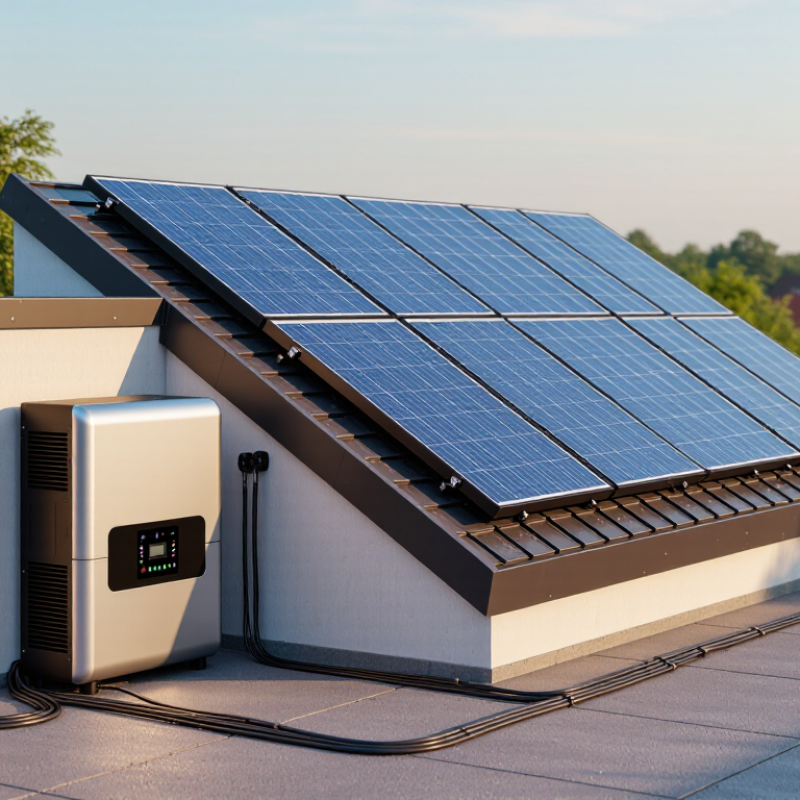
The chart uses a common residential design approach in which the solar PV array is approximately 1.2 times the inverter's nominal AC rating. This DC-to-AC ratio can improve energy harvest during mornings, evenings, and low-irradiance conditions while keeping inverter clipping within a practical range. Confirm the final rating using local electrical codes, expected peak demand, battery requirements, and the inverter's maximum DC input specifications.
Compare Inverter Types and Their Operating Principles
How to Choose the Best Solar Inverter?
A solar inverter converts panels’ direct current into alternating current for household loads and the utility grid. Its operating principle affects energy yield, safety, maintenance, and future expansion. During a rooftop assessment, morning shade from a chimney can reduce one panel string’s output. That detail often matters more than a small efficiency difference.
String inverters connect several panels in series and control them through maximum power point tracking. They usually cost less and simplify maintenance. However, uneven shade can limit the whole string.
Microinverters work behind individual panels, so each module operates independently. They suit complex roofs, but they add more rooftop electronics. Central inverters handle large arrays efficiently, although they need careful system design and suitable service access.
Hybrid inverters manage solar power, batteries, household demand, and grid exchange. Their bidirectional conversion allows batteries to charge and discharge. A grid-tied inverter normally disconnects during an outage to prevent dangerous backfeeding. Backup operation needs approved isolation equipment and correct load planning. Check the inverter’s voltage range, maximum current, temperature rating, protection level, and monitoring method. An installer should also verify local electrical requirements and panel compatibility. I would not choose from efficiency alone. Real roof shading, battery plans, and repair access deserve equal attention. No comparison is perfect.
Evaluate Efficiency, Capacity, Compatibility, and Safety Features
How to Choose the Best Solar Inverter?
Choosing a solar inverter begins with efficiency, but the largest percentage is not always the best choice.
During a rooftop installation, I learned that real performance depends on temperature, shading, wiring, and daily power demand. Check both peak and weighted efficiency in the technical documentation. A small efficiency loss can become significant over many years. It was not obvious.
Capacity must match the solar array, battery system, and household load.
An undersized inverter may limit production during bright midday hours. An oversized unit can increase costs and operate inefficiently under light loads. Review continuous output, surge capacity, and expected future expansion. I once focused only on current consumption. That was a poor assumption. Refrigerators, pumps, and power tools can create brief but demanding surges.
Compatibility deserves careful attention.
Confirm the inverter works with the panel voltage range, battery chemistry, monitoring system, and local grid requirements. Ask a qualified installer to verify cable sizes, grounding, ventilation, and shutdown controls. Safety features should include overcurrent protection, anti-islanding protection, thermal monitoring, and fault detection. Independent test reports and recognized electrical certifications provide stronger evidence than advertising claims. Read the installation manual before purchase. Small details matter.
A reliable choice also considers warranty conditions, service access, and replacement procedures.
Keep records of installation settings and performance readings. Solar equipment changes quickly, and some specifications may be difficult to compare honestly. Ask direct questions, and leave room for professional review.
Check Installation Conditions, Monitoring Options, and Maintenance Needs
Choosing a solar inverter starts with the installation site, not the product label. IEA PVPS Trends 2024 reports 456 GW of new solar capacity worldwide in 2023. That growth makes careful site assessment increasingly important. Check roof orientation, shading, cable distance, ventilation, and local temperature extremes. A hot, enclosed utility room can reduce efficiency and shorten component life. Confirm the inverter’s voltage range matches the planned panel string. Never rely only on the panel’s rated power.
Monitoring should reveal useful problems, not create more screens. Choose a system that records daily energy, voltage, temperature, and fault events. Remote alerts can identify sudden production losses after storms or grid interruptions. However, internet-based monitoring is not a substitute for physical inspection. NREL’s photovoltaic operation and maintenance guidance recommends visual checks, electrical testing, and thermal inspection. Data can be incomplete. Sensors can fail too.
Maintenance needs deserve a realistic budget. NREL’s 2024 Annual Technology Baseline models a 30-year utility-scale PV life and a 15-year inverter replacement interval. Residential equipment may experience different conditions. Dust, salt air, rodents, and poor airflow can accelerate wear. I once treated monitoring as proof that everything was healthy. That shortcut was wrong. Ask installers about access, firmware updates, spare parts, and documented service procedures. Leave working clearance around the inverter. Small decisions here can prevent expensive downtime later.
Assess Warranties, Certifications, Costs, and Long-Term Value
How to Choose the Best Solar Inverter?
Warranty terms reveal more than a glossy efficiency chart.
Compare the base warranty, extension price, labor coverage, shipping duties, and claim process. A five-year warranty may be acceptable for a low-cost project, but it creates earlier replacement risk. Fraunhofer ISE’s Photovoltaics Report (2024) notes that inverters generally have shorter service lives than photovoltaic modules, often requiring replacement during a 20–30-year system life. The cheapest quote can look rational—and still age badly.
Check certification numbers, not vague claims.
IEC 62109 addresses inverter safety, while IEC 62116 covers anti-islanding performance. Grid-interconnection requirements may also involve IEC 61727 or UL 1741, depending on location. Confirm that the certificate applies to the exact model and firmware version. A useful admission: no datasheet predicts every rooftop. Heat, dust, unstable voltage, and poor ventilation can reduce practical life.
Evaluate long-term value with a simple ownership estimate:
purchase price, installation, warranty extension, expected replacement, monitoring, and lost production during service. NREL’s 2024 Annual Technology Baseline includes replacement costs in lifetime photovoltaic financial modeling, showing why future maintenance belongs in today’s comparison. The IEA PVPS Trends 2024 report recorded about 456 gigawatts of new solar capacity in 2023, increasing the importance of dependable grid compliance. Ask who performs repairs locally, how fast parts arrive, and whether a failed unit leaves a dark wall-mounted box for weeks. Reliable support matters.